

Why Your Sunscreen Type Matters
Why Sunscreen Type Determines the Balance Between Robust UV Defense and Skin Barrier Integrity
Sunscreen type, specifically the difference between mineral (physical) formulations using Zinc oxide or Titanium dioxide and chemical (organic) formulations that absorb UV rays, plays an important role in how well a product protects the skin while maintaining the integrity of its outer barrier, the stratum corneum.
Ultraviolet (UV) radiation itself weakens the skin barrier by increasing transepidermal water loss (TEWL), triggering inflammation, and accelerating both photoaging and skin cancer development. At the same time, sunscreen formulations can either support or subtly challenge the barrier depending on how they work and what they contain. Choosing the right type helps prevent this cycle of damage.
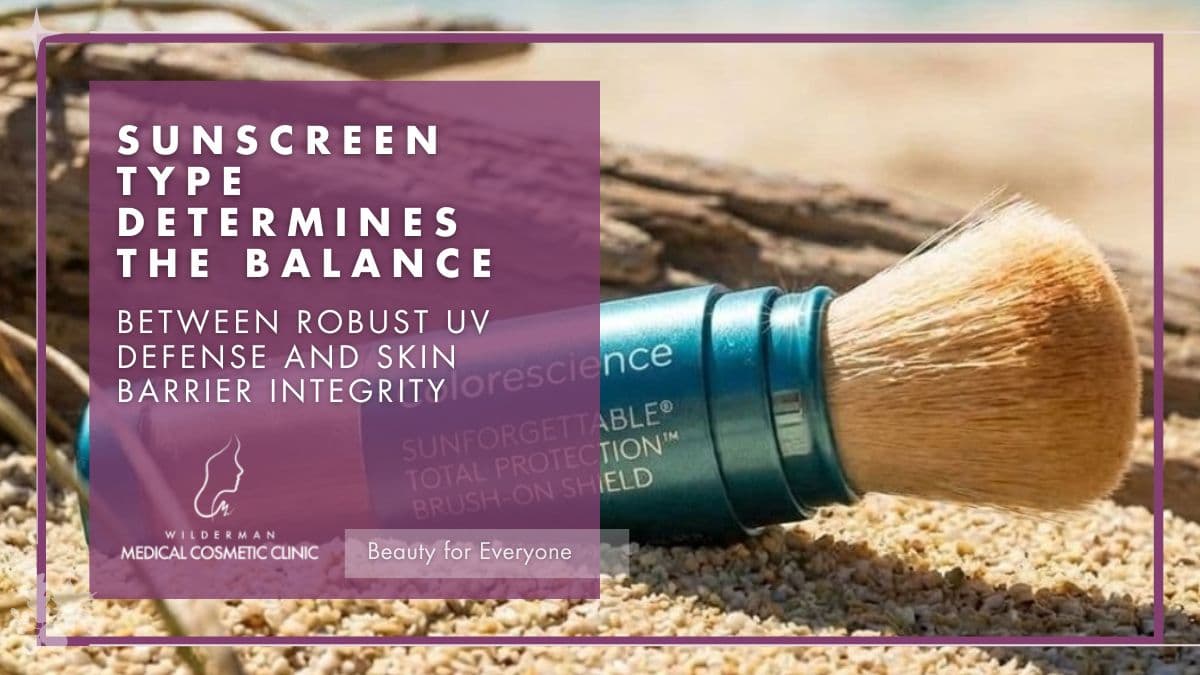
Defining Sunscreen Types in the Context of UV Defense and Skin Barrier Protection
Mineral sunscreens sit on the surface of the skin and form a protective layer that reflects and scatters UV rays. Zinc oxide and Titanium dioxide also absorb a portion of UV radiation, but they largely remain on the surface and do not penetrate deeply.
Chemical sunscreens work differently. They absorb UV radiation into the skin and convert it into heat through a chemical reaction. Because of this, they need time to bind to the skin before becoming effective.
This difference matters. Mineral sunscreens act immediately and have minimal interaction with skin lipids or proteins, making them less likely to disrupt TEWL or the skin pH. Chemical filters, while effective, may irritate some individuals, particularly those with sensitive or compromised skin.
What This Targets (Skin Concerns and Conditions Linked to UV Exposure and Barrier Compromise)
The primary concern is cumulative UV-induced damage to the skin barrier. This can present as:
- Dryness and dehydration.
- Increased sensitivity or reactivity.
- Collagen breakdown and premature aging.
- Hyperpigmentation.
- Increased risk of skin cancer.
When the barrier is weakened, it becomes more vulnerable to environmental stressors, which further worsen inflammation and disrupt the skin’s lipid structure.
People with sensitive or compromised skin, such as those with rosacea, a history of atopic dermatitis, or recent cosmetic procedures, often benefit most from mineral sunscreens, mainly due to their lower irritation potential.
That said, all skin types benefit from consistent sunscreen use. For individuals with darker skin tones or visible light sensitivity, tinted mineral sunscreens can offer additional protection without compromising barrier health.
How It Works (Mechanism of Action for Dual UV and Barrier Support)
Mineral sunscreens create a stable, surface-level shield that reflects and scatters UV radiation immediately upon application. Because they are not absorbed into the skin, they avoid triggering heat generation or biochemical reactions, helping preserve the skin’s natural lipid barrier and reducing oxidative stress.
Chemical sunscreens absorb UV radiation and convert it into heat. While effective, this process may occasionally trigger mild inflammatory responses or small shifts in skin pH in sensitive individuals. These effects are generally minimal and clinically insignificant, but can matter over time for those with already compromised skin barriers.
Evaluating Trade-Offs Between Sunscreen Types for Real-World UV Defense and Barrier Outcomes
Clinical evidence shows that both mineral and chemical sunscreens provide strong protection when labeled as broad-spectrum SPF 30 or higher and used correctly.
A prospective study of four commercial sunscreens found that all significantly reduced skin redness (erythema) caused by UV exposure. Changes in TEWL, hydration, and pH were minimal and varied slightly between products. Overall, sunscreen use supported skin stability far more than it disrupted it.
Mineral sunscreens tend to be more photostable and less irritating, making them a strong option for barrier-focused routines. Chemical sunscreens are often preferred for their lighter texture and invisible finish, but may require careful selection for sensitive skin.
Modern mineral formulations, especially tinted or micronized versions, have improved significantly, reducing the traditional white cast while maintaining effectiveness.
How It Compares With Alternatives
| Aspect | Mineral (Physical) Sunscreens | Chemical (Organic) Sunscreens |
| UV Defense Mechanism | Immediate reflection/scattering + partial absorption; photostable | Absorption after ~15 minutes; converts UV to heat |
| Barrier Impact | Minimal penetration; lower irritation risk; supports TEWL stability | Minor TEWL/pH changes possible; slightly higher irritation risk in sensitive skin |
| Usability & Feel | Thicker texture; possible white cast (improved in newer formulas) | Lightweight, transparent, easy to layer |
| Best For | Sensitive or barrier-compromised skin | Normal, non-sensitive skin seeking cosmetic elegance |
Both types are effective, but mineral sunscreens offer a clearer advantage for those prioritizing barrier protection.
Selecting the Optimal Sunscreen Type for Sustainable UV Protection and Barrier Health
Who Typically Benefits and Expected Results
Mineral sunscreens are especially suitable for individuals with sensitive skin or a history of barrier dysfunction. With consistent use, users can expect:
- Maintained or improved barrier function.
- Reduced signs of photoaging.
- Lower long-term risk of skin cancer.
Visible improvements, like reduced redness or reactivity, may develop gradually over weeks, while long-term protective benefits accumulate over years.
How It Is Used in a Routine (Application, Layering, and Pairing)
Apply sunscreen daily to clean, dry skin as the final step of your morning routine. Chemical sunscreens should be applied about 15 minutes before sun exposure.
- Use approximately one teaspoon for the face and neck.
- Reapply every two hours outdoors.
- Pair with barrier-supporting ingredients like Ceramides or Niacinamide.
Mineral sunscreens layer best when not combined with heavy occlusives that may affect spreadability.
What Users Typically Experience After Use
Mineral sunscreens are generally well-tolerated and do not cause stinging or discomfort. Chemical sunscreens may create a mild warming sensation initially, which usually fades quickly.
Over time, consistent use can lead to less reactive skin and fewer flare-ups, especially in sensitive individuals.
When Results Become Noticeable and How Long They Tend to Last
Barrier stabilization and reduced redness may be noticeable within days to weeks. Long-term benefits like reduced aging and cancer risk develop over months to years.
These benefits depend on consistent daily use. Stopping sunscreen allows UV damage to resume.
Recommended Usage Frequency
- Apply every morning.
- Reapply every two hours during sun exposure.
- Reapply after swimming or sweating.
Even indoor exposure near windows can justify daily use due to UVA penetration.
Safety and Possible Reactions (Irritation and Contraindications)
Both sunscreen types are considered safe and are regulated. Mineral sunscreens have the lowest risk of irritation and minimal systemic absorption, making them suitable for sensitive populations, including infants over six months.
Reactions such as contact dermatitis or eye irritation are more commonly linked to certain chemical filters. Patch testing is recommended for highly sensitive skin.
Practical Considerations Users Care About (Accessibility, Formulation Types, and Shelf Stability)
- Widely available in lotions, creams, sticks, and tinted forms.
- Chemical sunscreens are similar or slightly lower in price range.
All FDA-compliant sunscreens remain effective for up to three years when stored properly. Discard products that show separation or unusual odor.
Questions Users Commonly Ask
- Does the white cast from mineral sunscreen affect effectiveness?
- Can chemical sunscreens be used on sensitive skin?
- Are tinted sunscreens necessary for darker skin tones?
- How can I confirm if my sunscreen is truly broad-spectrum?
- Will changing sunscreen types improve skin sensitivity?
Expert Guidance for Choosing the Right Sunscreen
While general recommendations can help, selecting the most suitable sunscreen often depends on your skin’s unique barrier function, sensitivity level, and daily exposure patterns. A personalized assessment with a qualified practitioner at Wilderman Medical Cosmetic Clinic can help identify whether a mineral or chemical formulation is better aligned with your skin’s needs. This approach not only improves UV protection but also supports long-term skin barrier health, especially for individuals with sensitive or post-procedure skin.
Key Takeaways
Sunscreen type is more than a cosmetic preference; it’s a strategic choice that influences both UV protection and skin barrier health.
Mineral sunscreens offer reliable, low-irritation protection and are especially suited for sensitive or barrier-focused routines. Chemical sunscreens remain effective alternatives, particularly for those who prefer lightweight, invisible formulations.
Regardless of type, consistent use of a broad-spectrum SPF 30+ sunscreen is essential. Clinical evidence shows that any minor formulation-related effects are far outweighed by the benefits of preventing UV-induced damage, including premature aging and skin cancer.
Key References/Citations
- American Academy of Dermatology. (n.d.). Sunscreen FAQs.
https://www.aad.org/media/stats-sunscreen - Gonzalez-Bravo, A., et al. (2022). The effect of sunscreens on the skin barrier. Cosmetics, 9(6), Article 167.
https://pmc.ncbi.nlm.nih.gov/articles/PMC9784273/
Join us on the journey to your best skin ever!
Beyond Beauty: Elevate Your Routine with Insider Tips and Breakthroughs – Subscribe Now!
Transform your beauty routine into something extraordinary!


